How to Connect Shopify to Google Merchant Center in 2025 (Fast Setup Guide)

by | Last updated Jan 28, 2026 | GMC

How Do I Connect Shopify to Google Merchant Center

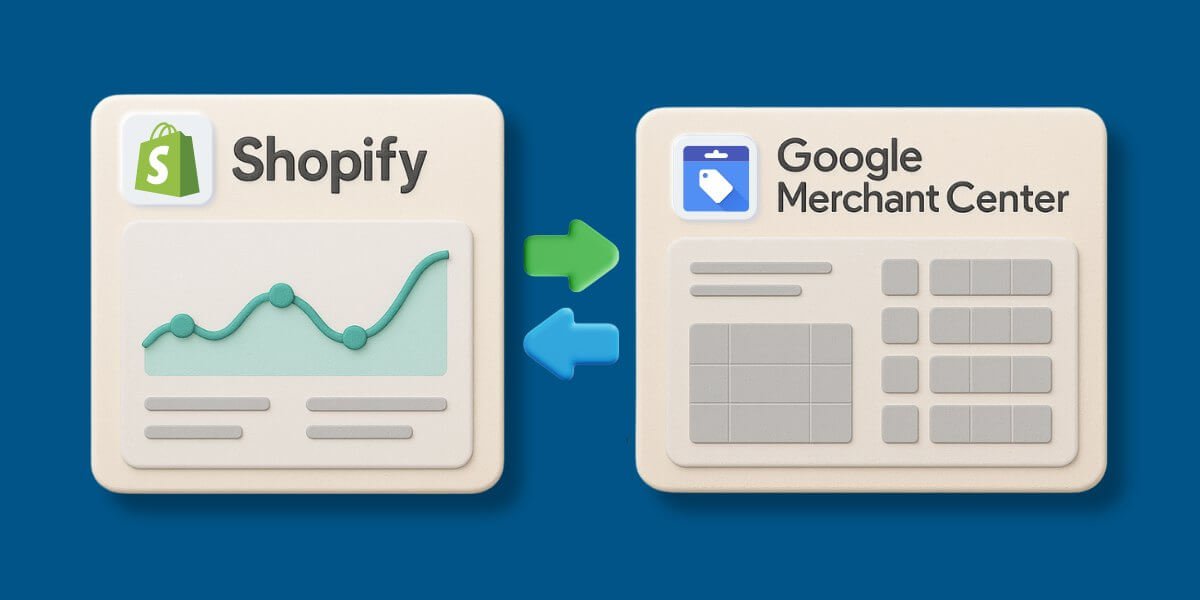
Connecting Shopify to Google Merchant Center in 2025 requires specific steps for a successful setup. First, create a Google Merchant Center account and verify your store ownership. Log in to your Shopify admin panel and install the Google Channel app. Click on “Connect to Google Merchant Center” and follow the authorization process. Select your target country and currency. Configure your product feed settings and shipping rules. Review your product data to ensure compliance with Google’s requirements. After setup, your products will sync automatically between Shopify and Google Merchant Center. This integration enables your products to appear in Google Shopping ads and free product listings.

In 2025, Google Shopping has become the #1 driver of ecommerce sales, with 68% of product searches now starting on Google rather than Amazon. However, recent policy changes have made the Shopify-to-Merchant Center connection process more complex than ever.

Prerequisites before Connecting Shopify to Google Merchant Center

1. Business Address Verification

  • Must submit either:
  • A utility bill (less than 60 days old)
  • Business license with matching address

Pro Tip: Use the same address as your Shopify store’s legal page.

2. Enhanced Phone Verification

  • Google now calls your business number
  • You must enter a 6-digit PIN during the call
  • Warning:VOIP numbers often fail – use a landline or mobile

3. Tax ID Validation

  • For US sellers: EIN must match business name
  • International sellers: VAT/GST registration required

Shopify Store Requirements

Your store must now have:

  • Complete legal pages (Privacy Policy, Returns, Shipping)

2025 Change: Must include physical return address

  • Payment processor that supports refunds
  • Valid contact email (no @gmail.com addresses)

Want to Connect Your Shopify Store to Google Merchant Center?

Our experienced team makes it easy to link your Shopify store and Google Merchant Center. Get your products displayed in Google Shopping results.

A Step-by-Step Setup Guide to Connect Shopify to Google Merchant Center in 2025

  • Install the Google & YouTube App
  • Link Merchant Center to Shopify
  • Optimize Your Product Feed

Step 1: Install the Google & YouTube App

  • In Shopify Admin, go to Apps > Shopify App Store
  • Search for “Google & YouTube”(official app)
  • Click Add app> Connect your Google account

Troubleshooting: If you see “OAuth Error,” clear browser cookies or try incognito mode.

Step 2: Link Merchant Center to Shopify

  • In the Google & YouTube app, select “Connect”under Merchant Center
  • Choose your Merchant Center account(or create one)
  • Enable “Surfaces across Google”(for free listings!)

⚠️ Critical 2025 Update: Google now requires:

  • Return policy URL in Shopify Settings > Legal
  • Shipping settings configured under Shopify > Settings > Shipping

Step 3: Optimize Your Product Feed

  • Go to Products > Google sales channel in Shopify to:
  • Fix missing attributes (GTIN, brand, condition)
  • Optimize titles: Include keywords + product type (e.g., “Women’s Running Shoes – Nike Air Max 2025”)
  • Use high-res images (1500×1500 px, white background preferred)

Data Tip: Products with 5+ images get 35% more clicks on Google Shopping.

GMC Most Common Errors (And Fixes)

Error: “Missing GTIN [gtin]”

Solution:

  • For branded products: Add the barcode number(UPC/EAN) in Shopify product details
  • For handmade items: Apply for GTIN exemptionin Merchant Center
Error: “Price mismatch between feed/website”

Solution:

  • Go to Shopify product page → Ensure price matches Merchant Center
  • Disable any currency switchers that cause discrepancies
Account Suspended?

Appeal Process:

  • Check Merchant Center > Diagnostics for policy violations
  • Correct errors → Submit reconsideration request
  • Wait 3-5 business days (2025 processing times)

Final Words

Connecting Shopify to Google Merchant Center is a game-changer for amplifying your online store’s visibility and driving more sales. By syncing your product catalog, you streamline your ability to get your items in front of potential buyers through Google Shopping. Whether you’re a small business owner or managing a large eCommerce operation, this integration simplifies your marketing efforts while maximizing reach.

Frequently Asked Questions (FAQs)

Is Google Merchant Center free for Shopify?

Google Merchant Center offers free integration with Shopify stores. Merchants can list products on Google Shopping without paying setup fees. Standard Google Ads costs apply only when running paid shopping campaigns.

How do I sync my Shopify products to Google?

Users must install the Google Channel app from Shopify’s app store. The app automatically syncs product data to Google Merchant Center. Products appear in Google Shopping results after account verification and data approval.

Do I need Google Merchant Center for Shopify?

Google Merchant Center is essential for Shopify stores wanting to display products on Google Shopping. The platform enables product listings in Google search results and shopping tabs. This integration increases product visibility to potential customers.

How long does it take for Shopify products to show on Google?

Google reviews new product feeds within 3-5 business days. Products appear in search results after feed approval. Real-time updates occur for existing approved products within 24 hours.

What are the requirements to connect Shopify to Google Merchant Center?

Merchants need a Shopify store with active products. They must have a Google account and verified domain ownership. Products require accurate titles, descriptions, prices, and images that follow Google’s policies.

Can I sell on Google Shopping without Shopify?

Sellers can use Google Merchant Center without Shopify. Google accepts product feeds from many e-commerce platforms. Direct product uploads through spreadsheets or API connections are possible alternatives.

Surface Must Match
Website footer Legal business name, address, phone
Contact page Phone, email, address, hours
About page Business name, description
Checkout confirmation Merchant name, support contact
Merchant Center account All of the above
Google Business Profile Name, address, phone — verified

Common Identity Failures We Find

  • Registered name is “Acme Commerce LLC” but only brand name appears on site — no connection Google can verify
  • Gmail address used as primary contact instead of a domain-matched business email
  • Different phone numbers appearing on different pages of the same website

Mistake 3: Submitting an Appeal Before Fixing the Root Cause

CONSEQUENCES OR EARLY APPEAL SUBMISSION
Appeal Timing Consequence
Submitted before fixes are complete Rejection — cool-down period starts
Second rejection Cool-down period gets longer
Third rejection Extended hold — reinstatement becomes significantly harder
Submitted before Google recrawls Reviewer sees old version of your site — not your fixes

 ✅ Our Rule

Fix everything first. Document every change. Wait at least 7 days for Google to recrawl all updated pages. Then submit the appeal.

What Google Actually Flags That Most Merchants Miss

Most guides cover the obvious items. These are the signals Google evaluates that almost no published guide covers.

1. No Verifiable Business Identity Across External Sources

Google cross-references your business identity against external signals — Google Business Profile, third-party directories, social profiles, and domain registration history. If your website says Chicago but your GBP lists a different city, these inconsistencies contribute to the misrepresentation assessment.

2. Website Change History

This is one of the most underreported triggers we have observed directly in client accounts. Google tracks the change history of your domain and Merchant Center account.

CHANGES THAT TRIGGER AUTOMATED RE-EVALUATION
Change Type Why It Triggers a Flag
Domain name change Google sees a new identity on an established history
Company rebrand Business identity no longer matches account history
Mass product title updates Signals a potentially different business category
Expired domain purchase Previous business history conflicts with new business type

Expired Domain Example

A merchant purchases an expired domain previously used for a different type of business. The domain has existing visibility and citations from its prior use. When the new owner starts a completely different business, Google detects the conflict between the domain’s history and the current business — triggering a misrepresentation flag.

3. Domain Hopping High Risk

🚨 Critical Warning

If you move products from a suspended domain to a new domain without changing your business practices, Google’s history tracking links the two accounts. This escalates the violation from Misrepresentation — which is appealable — to Circumventing Systems, which is a near-permanent ban that is extremely difficult to reverse.

4. Shell Site Signals Warning

Rapidly changing business details signal instability to Google:

  • Swapping physical addresses every few months
  • Changing business names repeatedly without a clear rebrand reason
  • Updating contact information without a corresponding business explanation

Google looks for business stability over time — not just compliance at a single point in time.

5. Checkout Behaviour

Google’s crawlers evaluate the checkout experience specifically. These are rarely mentioned in standard guides but appear regularly in re-review criteria:

  • Requires account creation before allowing purchase
  • Shows unexpected fees at the final payment step
  • Does not display merchant name on the payment screen
  • Unclear order confirmation with no contact details

The First 3 Things We Check When a Client Comes to Us

INSTALL ASSESMENT CHECKLIST
Priority What We Check What We Are Looking For
1 Website trust signals end-to-end Can a first-time visitor identify who the business is, how to contact them, and what the purchase terms are within 30–60 seconds?
2 Policy pages — content and consistency Contradictions between policy pages and product pages or feed data — not just whether pages exist
3 Product pages, cart, and checkout Price consistency across listing → page → cart → checkout; shipping match with feed; merchant name visible at checkout

Website Fixes That Unlock Reinstatement Most Often

Fix 1: Add Real, Verifiable Business Proof

BUSINESS IDENTITY REQUIREMENTS
Element Requirement
Business name Legal name consistent across all pages and Merchant Center
Phone number Real business line — not a personal cell phone
Support email Domain-matched (you@yourdomain.com) — not Gmail or Yahoo
About page Describes a real company with real people — not generic copy
Physical address Consistent format across footer, contact page, and GMC

Fix 2: Integrate an Approved Google Business Profile

GBP gives Google an independently verified source of your business identity that cross-validates what your website claims. In many cases we have worked on, all the website fixes were in place but reinstatement only came after GBP was verified and linked. We include GBP verification as a standard step in every reinstatement.

Expired Domain Example

  • GBP is verified — not pending
  • Business name matches Merchant Center exactly
  • Address matches website footer exactly
  • Phone number matches Contact page exactly
  • GBP is linked to Merchant Center account

Fix 3: Rewrite Policy Pages From Scratch

Do not edit a copied or template policy — rewrite it based on how your business actually operates.

POLICY PAGE REQUIREMENTS BY TYPES

Policy Page What Must Be Specific to Your Store
Returns & Refunds Exact return window, condition requirements, refund timeline, restocking fees if any, return method
Shipping Actual carriers used, processing time, delivery ranges by region, cutoff times
Privacy Policy Specific to your data collection — not a generic template
Terms & Conditions Payment terms, dispute resolution, applicable jurisdiction
Policy Language: Fail vs Pass

❌ Fails Google Review ✅ Passes Google Review
“We process returns in a timely manner” “Returns accepted within 30 days of delivery, processed within 3 business days, refunded to original payment method”
“Shipping times may vary” “Orders ship within 1–2 business days via USPS or UPS. Delivery: 3–7 business days to US addresses”
“Contact us for more information” “support@yourdomain.com · (555) 123-4567 · Mon–Fri 9am–5pm EST”

Fix 4: Update Product Pages and Feed Data

  • Price must match exactly across: listing → product page → cart → checkout → feed
  • Availability claims must reflect real inventory status
  • Remove restricted language — especially in health, wellness, and supplement categories
  • Shipping estimate on product page must match the Merchant Center feed

Step-by-Step Fix Process

⚠️ IMPORTANT

Do not submit an appeal until every step below is complete. Use GSC URL Inspection to confirm pages have been recrawled before submitting.

1
Read Suspension Notice

Go to Merchant Center → Diagnostics → Account issues. Screenshot the exact violation language.

2
Audit Business Identity Across All Pages

Check footer, Contact page, About page, checkout, Merchant Center, and Google Business Profile.

3
Rewrite All Policy Pages From Scratch

Rewrite returns, shipping, privacy, and terms based on real operations.

4
Verify Google Business Profile

Start verification — may take 5–7 days. Link to Merchant Center.

5
Fix Product Pages and Feed Data

Check price consistency, remove restricted language, update feed.

6
Run a Full Test Purchase

Verify checkout flow, pricing, and confirmation details.

7
Wait Minimum 7 Days for Recrawl

Allow Google to recrawl before submitting appeal.

8
Document Every Change With Screenshots

Keep before/after proof of all fixes.

9
Submit Appeal via Merchant Center

Go to Account issues → Request re-review.

How to Write a Successful Appeal

SUCCESSFUL APPEAL VS REJECTED APPEAL
Successful Appeal Rejected Appeal
Submitted after full recrawl — 7+ days after fixes Submitted within 24–48 hours of changes
GBP verified and linked to Merchant Center GBP pending or not linked
All root causes fixed Only surface-level items addressed
Specific language about what was changed Vague claims of general compliance
Professional, honest, non-argumentative tone Defensive or argumentative tone

Appeal Message Template That Works

Copy and customise for your account

We received the suspension notice for Misrepresentation and conducted a full review of our website and Merchant Center account.

We have made the following corrections:

  • Updated business information to ensure consistency across all pages and our Merchant Center account
  • Rewritten returns, shipping, and terms policies to clearly reflect our actual business practices
  • Verified our Google Business Profile and linked it to our Merchant Center account
  • Corrected product page and feed data inconsistencies

We are confident our account now meets Google’s Shopping policies and respectfully request a re-review.

Special Considerations for Dropshipping Stores

Dropshipping stores face a higher bar for reinstatement. Your appeal needs:

  • Evidence of supplier relationships
  • Verifiable fulfilment arrangements
  • Proof of business legitimacy beyond a compliant-looking website

Real Reinstatement Cases

NickWilkins.shop
eCommerce · 1 Appeal · 10–12 Days
Suspension Reason Misrepresentation — no trust signals, copied policy pages
Root Cause No verifiable business identity; templated policies with no store-specific detail
Fixes Applied Full business information added; all policy pages rewritten
Number of Appeals 1
Time to Reinstatement 10–12 days
GoTurbo.net
Automotive eCommerce · 1 Appeal · 8–10 Days
Suspension Reason Misrepresentation — trust signal gaps
Fixes Applied Policies rewritten; business info added; Google Business Profile verified
Number of Appeals 1
Time to Reinstatement 8–10 days
Neutrove.com — Medical Supplements
Restricted Category · 4 Appeals · ~1 Month
Category Vitamins and health supplements
Standard Expectation Medical certificate required
Initial Appeals 3 — rejected
What We Did Differently Replaced restricted language; waited for full recrawl; submitted final appeal
Result Approved — no certificate required

KEY LESSON FOR RESTRECTED CATEGORIES.

In restricted categories, recrawl timing matters as much as the fixes themselves. Google’s review decision is based on what its crawler has indexed — not what your site looks like on the day you submit. Submitting before updated content is fully indexed means the reviewer is looking at old data. After replacing all restricted language, we waited approximately one month for Google to fully recrawl every updated page before submitting the fourth appeal.

Frequently Asked Questions

Q

What does misrepresentation mean in Google Merchant Center?

Misrepresentation means Google cannot confidently verify your store’s identity, product claims, or post-purchase commitments. It does not always mean intentional deception — incomplete policies, unverifiable business information, and inconsistent data across your site and feed can all trigger it.

Q

How long does a Google Merchant Center misrepresentation suspension last?

There is no fixed duration. Most straightforward cases take 2–3 weeks from the start of fixes to reinstatement. Complex cases — particularly restricted product categories or accounts with multiple failed appeals — can take longer.

Q

Can I create a new Google Merchant Center account if suspended for misrepresentation?

No. Creating a new account while suspended is treated as Circumventing Systems — a separate and more severe violation. Google links accounts by domain, business details, payment methods, and IP signals. The escalation significantly reduces the chance of reinstatement.

Q

How many times can I appeal a Google Merchant Center suspension?

There is no official hard limit, but each rejected appeal triggers a progressively longer cool-down period. After three failed appeals the path to reinstatement becomes substantially harder. Fix every root cause before the first appeal — not after a rejection.

Q

Will fixing GMC misrepresentation also fix my Google Ads suspension?

Often yes — if your Google Ads account was suspended as a direct result of the Merchant Center misrepresentation issue, fixing and reinstating the Merchant Center typically resolves the Ads suspension as well. If your Ads account was suspended independently, the two need to be addressed separately.

Q

How do I know if my appeal is likely to be approved?

Strong indicators of likely approval:

  • Google Business Profile verified and linked to Merchant Center
  • All policy pages specific and consistent with feed data
  • Business identity consistent across every page and Merchant Center account
  • Minimum 7 days waited after fixes for Google to recrawl
  • Appeal message is specific, honest, and professional

After Reinstatement: How to Stay Compliant

Post-Reinstatement Compliance Practices
Practice Why It Matters
Do not use language Google flagged as restricted Reinstated accounts are monitored more closely than new accounts
Do not change policy pages without review Policy pages approved at reinstatement are the standard Google accepted — changes reintroduce risk
Maintain consistent product data Price and availability mismatches are the most common cause of re-suspension after reinstatement
No fake offers or misleading promotions Countdown timers that reset, unavailable discounts, or hidden fees trigger rapid re-suspension
Monitor Merchant Center Diagnostics weekly Catching a warning before it becomes a suspension is significantly easier to resolve

Need This Done For You?

If you would rather have a specialist handle the full reinstatement process — audit, fixes, GBP verification, and appeal submission — our team at Trusted Web Eservices works exclusively on Google Merchant Center and Google Ads reinstatements for US eCommerce stores.

Ajay Mistry

Verified Verified Google Merchant Center Compliance Specialist

Ajay Mistry is a Google Merchant Center Compliance Specialist with deep expertise in resolving account suspensions, correcting misrepresentation issues, and building policy-compliant eCommerce advertising systems. He specializes in Google Merchant Center, Performance Max (PMax), GA4 tracking, and Google Tag Manager, helping businesses achieve stable approvals, accurate data, and scalable growth through strict adherence to Google guidelines.